


Many drivers are aware of the need to use a new engine more carefully, but often forget that car tires also need a similar period of adaptation. This is not just an urban legend or advice from experienced mechanics, but a scientifically based process that directly affects the safety, handling and durability of the tire.
window.googletag = window.googletag || {cmd: []};
googletag.cmd.push(function() {
googletag.defineSlot(‘/128945922/Actualno.com/InArticle//1’, [[1, 1],[300, 100], [336,600], [300, 50], [120, 240], [300, 75], [300, 250], [250, 250], [336, 280], [180, 150], [200, 200],[336,280],[300,600]], ‘/128945922/Actualno.com/InArticle//1’).addService(googletag.pubads());
});
What do the colored stripes and dots on the tires mean?
The reason lies in the peculiarities of the production process. In order for the newly developed tire to be easily removed from the mold, manufacturers use special lubricants and adhesives. Some of these chemical compounds remain on the surface of the tread, making it too smooth and slippery. Until this thin layer is worn, the tire cannot provide maximum grip on the road surface.
Leading manufacturers recommend that the first few hundred kilometers be devoted to running. We are usually talking about a distance of 500 to 800 km. During this time, the driver must maintain a calm driving style so that the surface of the tire gradually and evenly rubs into the asphalt and all residual production substances finally disappear. Interestingly, even bicycle tire manufacturers advise to ride carefully during the first 50 km for better adaptation.
The breaking procedure does not require special skills. The main rule is to avoid extreme stress. During the first 500-800 km, try not to start suddenly, avoid emergency braking and aggressive cornering. Smooth acceleration and early deceleration will help the tread to adapt in optimal mode. It is also advisable to observe a moderate speed limit and not exceed the established limits.
An equally important aspect during breaking is air pressure control. Incorrect pressure in new tires can lead to uneven wear and overheating, which will significantly shorten the service life. It is recommended that the pressure be checked at least once a week, especially during the first month of surgery.
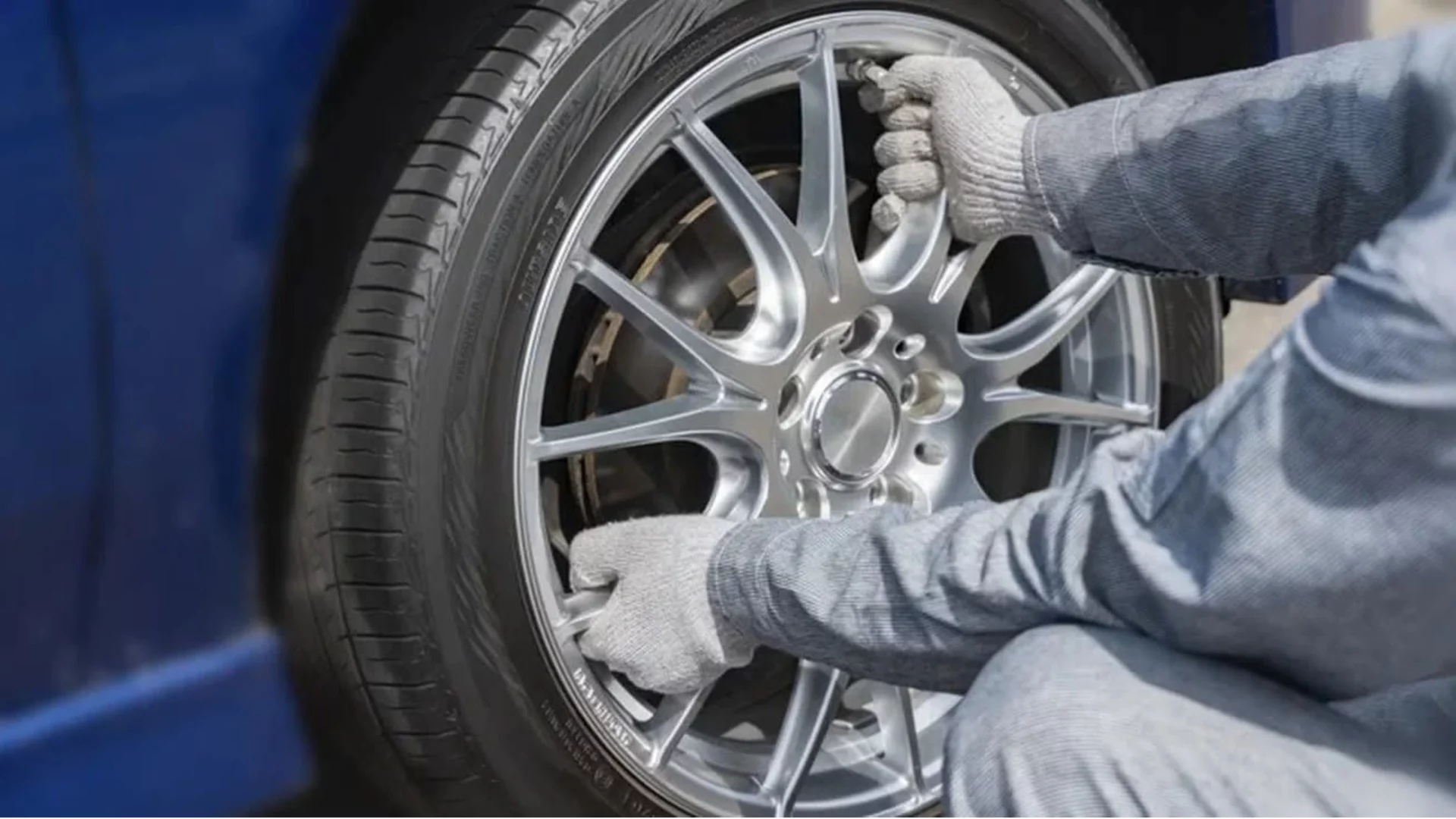
In addition, after a run of 50-100 km after fitting new tires, it is worth visiting a tire repair shop to tighten the wheel nuts. This ensures that the wheels are securely locked.
The “development” rule applies to absolutely all types of new tires: summer, all-season and off-road. Tires are a significant investment in the safety and comfort of your vehicle. Getting it right is a simple but effective way to make sure you get the most out of your purchase. Follow-up care, such as timely balancing and rotation of the wheels every 8,000-10,000 km, will help extend their life, ensuring stable operation and uniform wear of the tread throughout the service life.
Source: Actualno

