


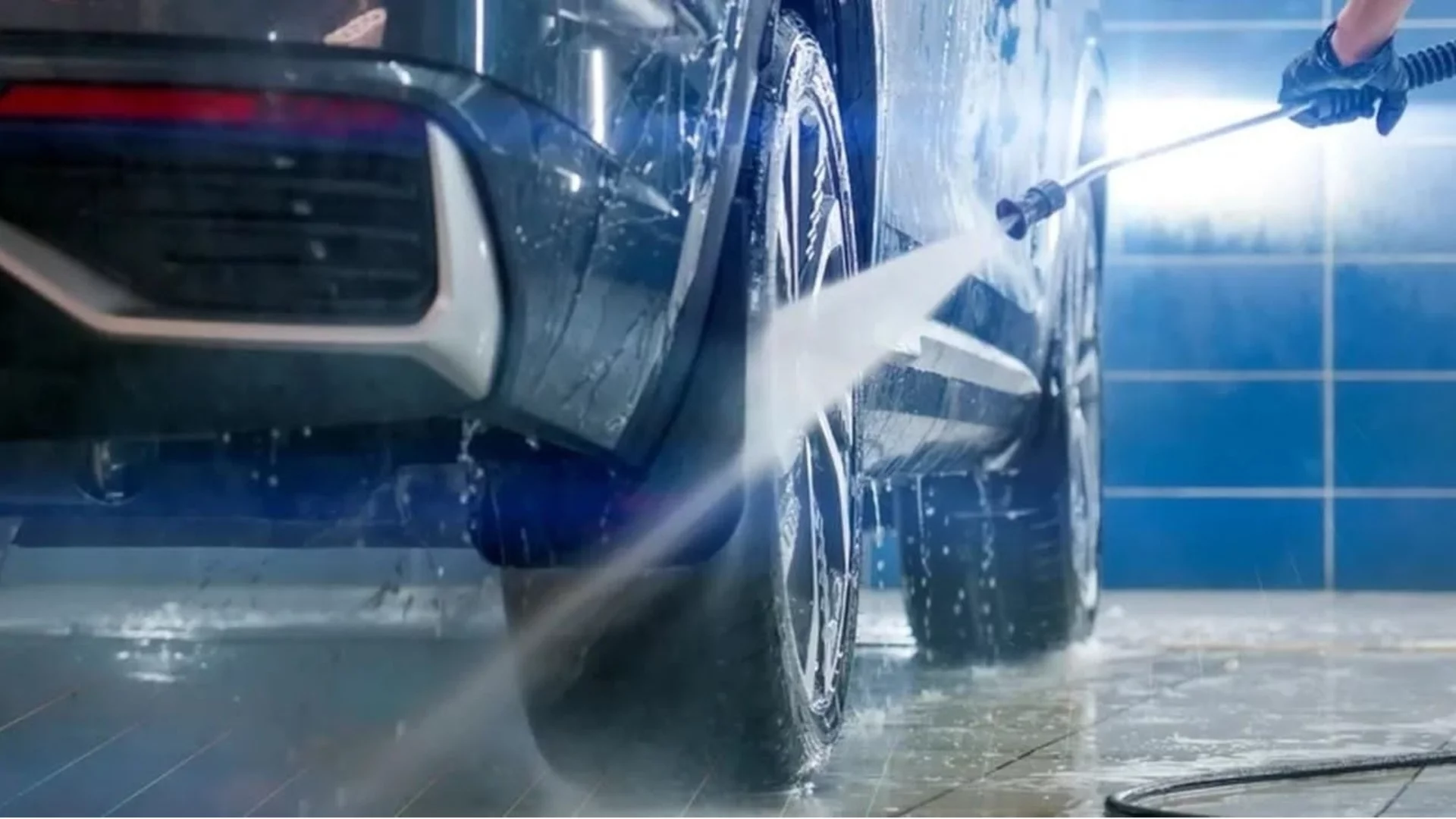
A water jet seems like a perfect tool for cleaning your car quickly and efficiently, but in the wrong hands it can become a real weapon and cause serious damage. Tires are particularly vulnerable, and damage to them can lead to unpleasant consequences on the road.
Many drivers do not even suspect that a powerful jet of water directed at the wheel can cause irreparable damage. Research shows that around 80% of car owners are unaware of the risks associated with using a pressure washer. A direct impact to the sidewall of the tire can cause microscopic damage to the tire or even visible cuts. Over time, these defects lead to premature degradation of the material, the appearance of slow air leaks and, as a result, insufficient tire pressure, which is one of the most common causes of wheel explosions while driving.
To avoid disaster and keep your tires in good condition, it’s important to follow a few key rules. First, it is necessary to control the water pressure. Light and medium units that produce pressure in the 1200 to 1900 psi range are ideal for car washing. This power is enough to wash off dirt, road salt and dried bird droppings without damaging paint, glass, plastic or rubber.
Equally important is the water flow, which is usually measured in liters per minute. The optimum ratio is pressure up to 1900 psi with a flow of 3.7 to 7.6 liters per minute. When washing, keep the nozzle at least 30-45 centimeters from the surface. This is the gold standard of safety, which allows you to effectively clean not only the car, but also, for example, the terrace near the house.
It is also worth choosing the right nozzles: for the body, use a nozzle with a spray angle of 40 degrees, and for more stable dirt on the wheels, a nozzle with an angle of 25 degrees is suitable. It removes dirt without creating excessive point pressure.
Why is applying wax at a self-service car wash dangerous?
Particular attention should be paid to the contact area between the tire and the rim. Never direct a powerful stream of water directly at this location. This can lead to moisture infiltration and air leakage, especially if the tires are no longer new and show signs of aging or microcracks.
As for the rims themselves, their water jet cleaning is quite safe if you follow the above rules. This is the easiest way to get rid of harmful brake dust, dirt and caked-on mud. The process can be greatly simplified: first rinse the main dirt with pressurized water, then apply a special cleaner for rims and tires, work the surface with a soft brush to lift the dirt, and finally rinse everything thoroughly with clean water.
Remember that your car’s main enemies when washing are excessive pressure, too close a distance and strong chemicals. The right approach will turn a potentially dangerous procedure into effective and safe care for your car.
Source: Actualno

