


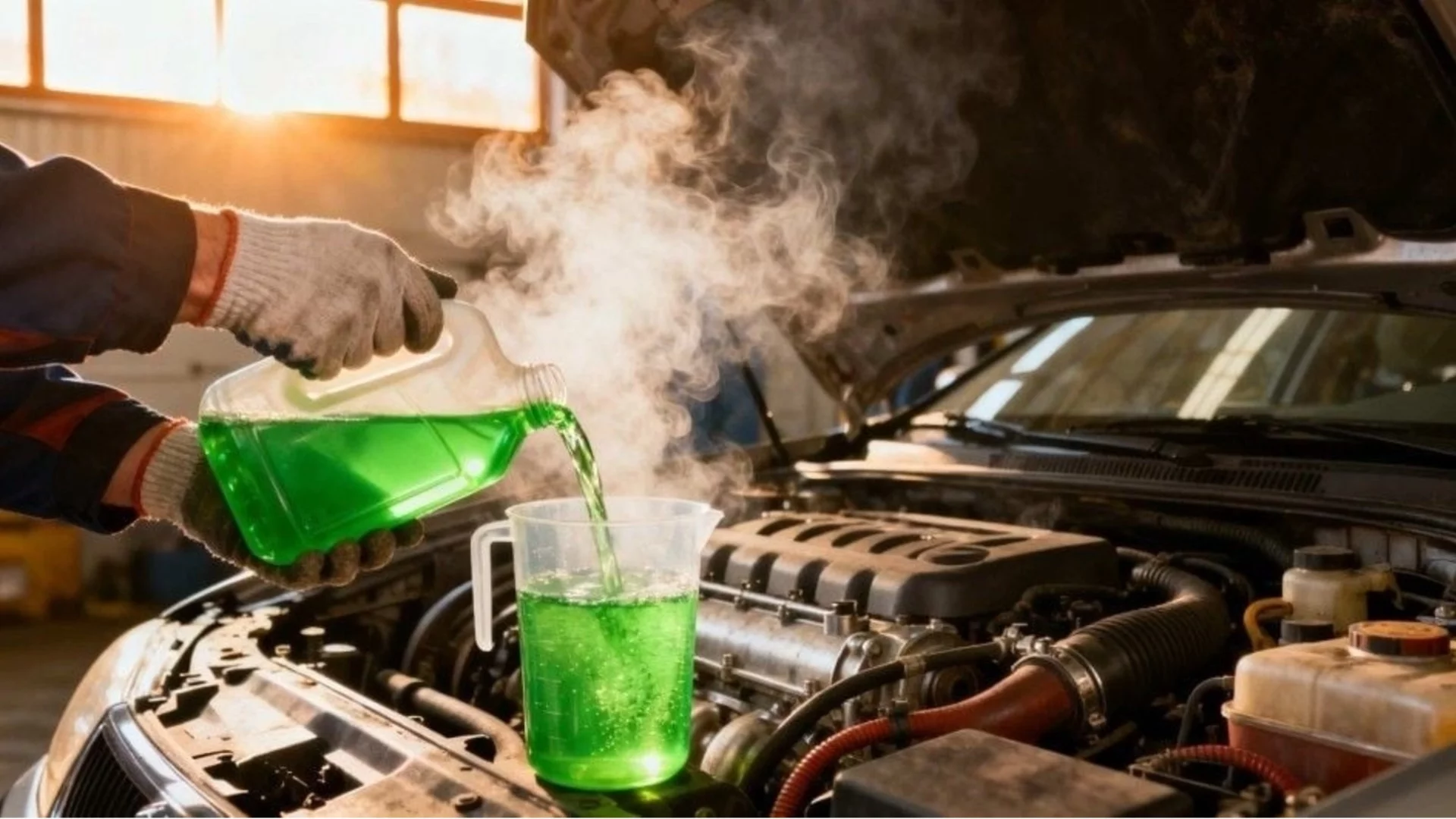
Timely replacement of the coolant is the key to a long engine life. In the conditions of bad roads and different climates, ignoring the regulations can lead to serious damage and costs. Therefore, it is important to know how to avoid mistakes.
The issue of coolant replacement has long been regulated by the formal maintenance framework. However, with modern cars, more and more often, the manufacturer does not set a clear deadline for replacing antifreeze. In some guidelines you may find vague wording: “for the entire working life”. But in fact, this only means the warranty period, not the actual resource of the fluid.
Most often, the restriction is related to years and mileage
Ignoring these terms can lead to unpleasant consequences: wear of the pump, clogging of the radiator of the heater and in severe cases – deformation of the cylinder head. In addition, old antifreeze not only dissipates heat worse, but also becomes aggressive, causing electrochemical corrosion in the system.
Check the coolant volume in the manual before replacing
A distinction is usually made between total and actual replaceable volume. It is better to focus on the second indicator, but it is worth having a reserve of 1.0-1.5 liters. Most cars with a four-cylinder engine require 5-8 liters of finished composition.
The replacement process begins with warming the engine up to operating temperature and turning on the heater to maximum – this allows you to open all the valves and the thermostat so that the fluid circulates in a large circle. After stopping the engine, you need to let it cool down for 10-15 minutes, and then carefully unscrew the cap of the expansion tank to reduce the pressure. Drainage is carried out through the lower part of the radiator, and if the design allows, through the cylinder block. After complete draining, all plugs are tightened and fresh antifreeze is poured into the system up to “MAX”.
The most important stage is deaeration
For this, the engine is started with the hood open. As it heats up, the fluid level drops and needs to be topped up. When the radiator fan turns on, the thermostat opens and air escapes. The lid is then closed, and the next morning the level is checked again – usually a little topping up is required.
Many drivers are interested in whether the system should be flushed when replacing antifreeze. If the fluid is changed regularly and the drained composition is clean, flushing is not necessary. But if the car was purchased with mileage or sediment is visible in the system, it is necessary to flush it with distilled water with a special composition – this helps to restore heat exchange to the radiators and prevent overheating.
Modern antifreezes are divided into several types according to the composition of additives, and it is not recommended to replace them with each other. When choosing a liquid, you should focus on the manufacturer’s recommendations and the climatic conditions in the region. Regular maintenance of the cooling system is the key to stable engine operation and saving on repair costs.
In heat and intensive use, the cooling system becomes particularly vulnerable. As with aquaplaning, where a sudden loss of control on a wet road can lead to an accident, ignoring antifreeze replacement regulations creates hidden engine risks.
Source: Actualno

