


Even at the Brno main station, it was impossible to miss that something big was about to happen.
Around the station, metalheads of all ages gathered, recognizable in most cases by metal t-shirts (the dress code of metalheads is now more diverse than in the past, long hair is no longer an obligation).
The interstate train also pulsated with metal energy. A little more packed than usual, with a higher concentration of heated debates about music, black t-shirts and merch of all kinds, dominated by the square Iron Maiden logo that the band has used since their inception.
When a person performed in Bratislava on Saturday, he could get the impression that our capital has temporarily turned into a mecca for metalheads.
A Polish family (including children) who asked our group how to get to the venue of the concert had only to point with a smile to the masses of black blood cells rolling through the bloodstream of the streets of Bratislava towards the heart, which for that day was the National Football Stadium.
Legends as front runner
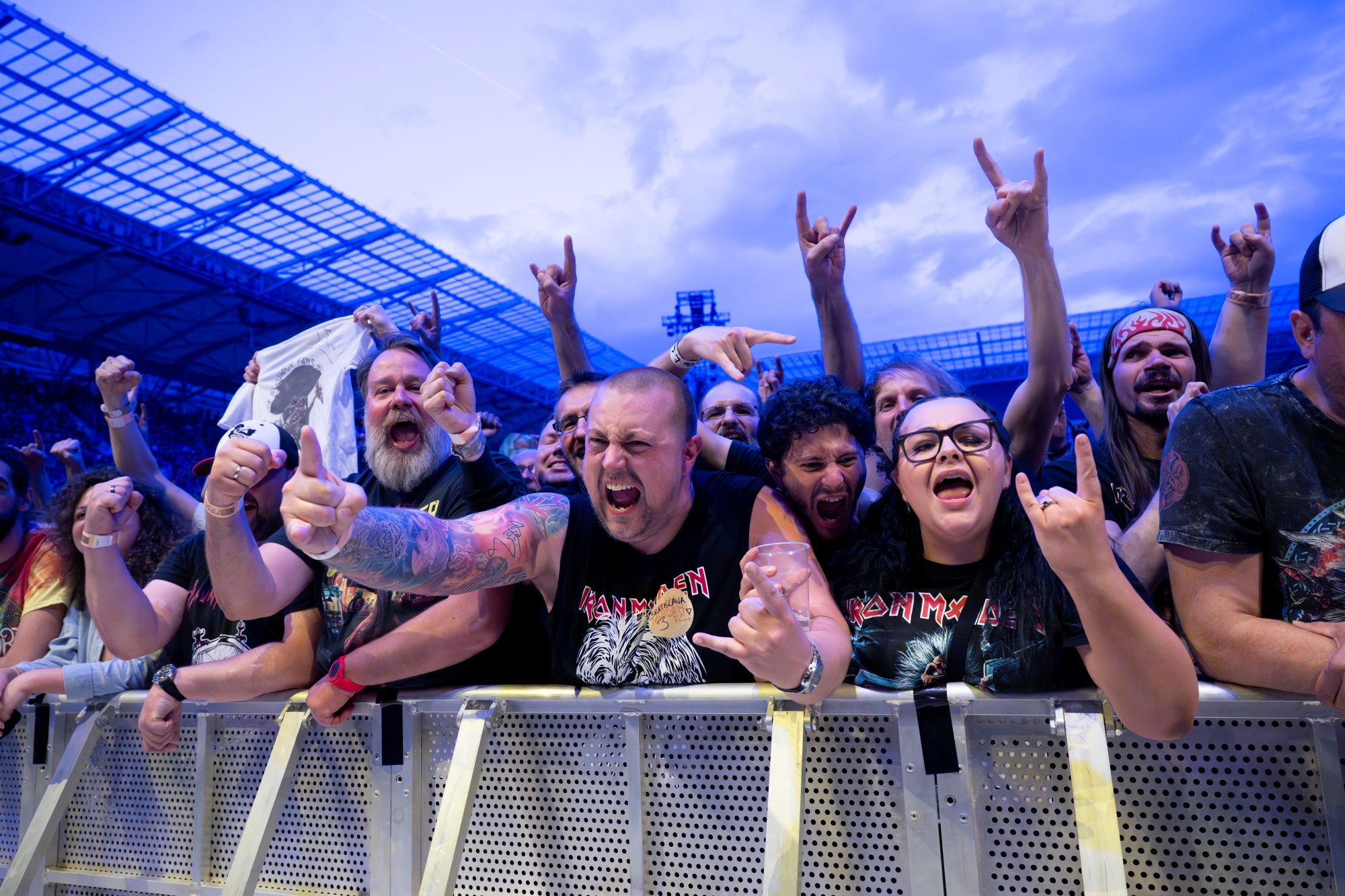
The band Iron Maiden deliberately avoids selling VIP tickets with exclusive access to front seats (so-called golden circle) so that only the richest fans stand in front. Even a plebeian fan arriving at the concert venue an hour before the pre-starter could comfortably secure an excellent place to stand.
It really puts things into perspective when you realize that Iron Maiden is a band that can afford to have Anthrax as an opening act. It is a member of the so-called the big four of thrash metal and a legendary band in its own right, which has been on the scene for 40 years.
A short art historical digression is necessary here. The specific generation of bands that we now refer to as thrash metal were known as “street metal” in the 1980s. They were inspired by the punk energy and sophistication of the so-called guitar arrangements. of the new wave of British heavy metal (NWOBHM), which included Iron Maiden themselves, and hardened a little more.
It was their unprecedented vigor at the turn of the 80s and 90s that raised doubts as to whether NWOBHM would even survive the new millennium as a relevant genre. Similar question marks also appeared in the 90s, when clumsy grunge began to rule the culture instead of monumental metal.
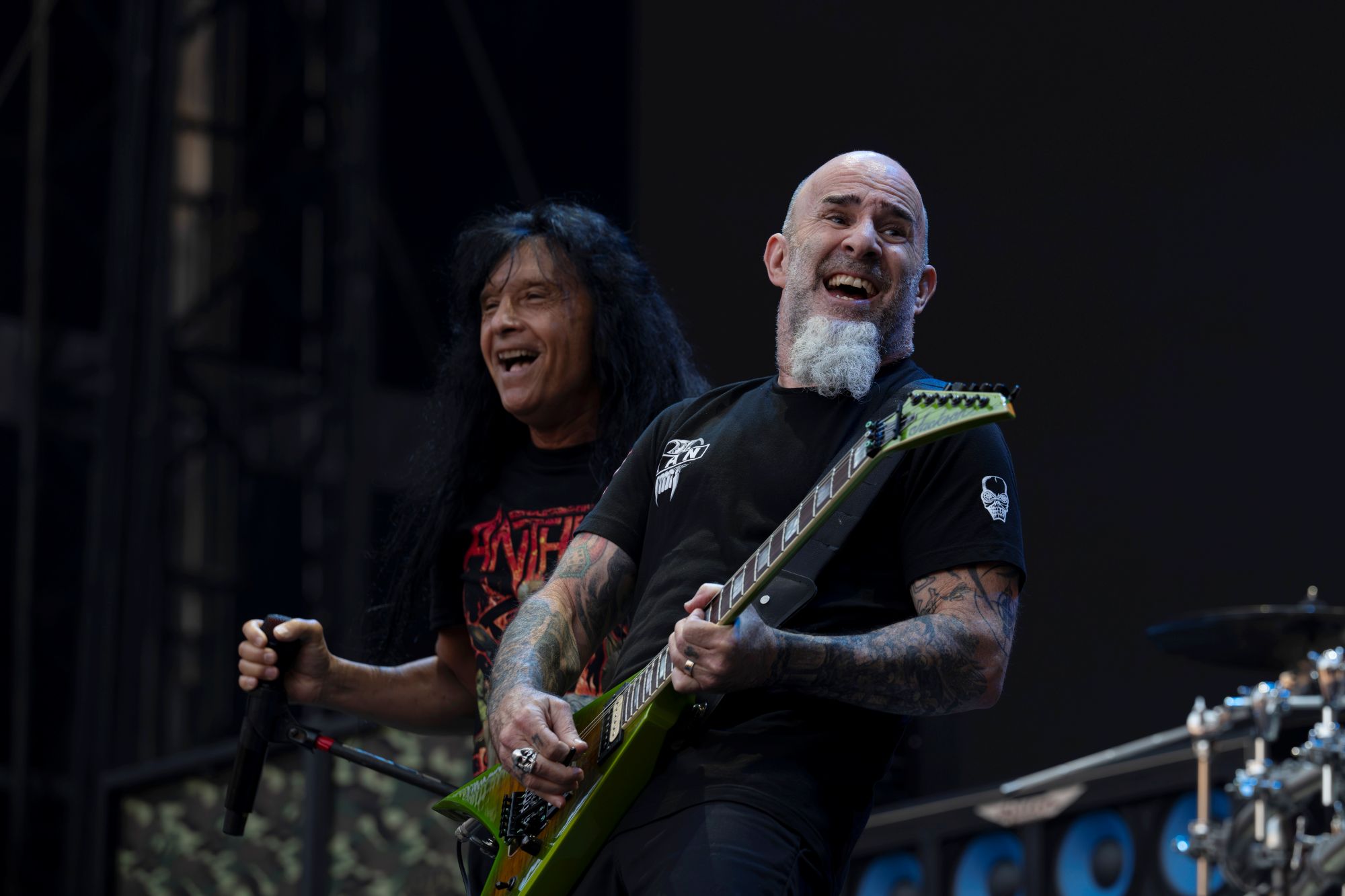
Well, let Saturday’s coexistence of Anthrax and Iron Maiden at the Bratislava stadium be the answer to these doubts. Although it was noticeable from the energy of the crowd that he came primarily for “Maidens”, the already frenetic riffs of the New York group, catchy and sharp as a butcher’s hook, earned thousands of menacing fists and chants from the crowd.
The band built their setlist primarily on older cuts, they also played a new single, the grinning guitarist Scott Ian traditionally seemed like he was having the best day of his life. A very pleasant warm-up despite the slightly less audible bass.
Historical pieces
After Anthrax threw quantum strums and other equipment into the crowd and dozens of hard-working technicians rushed to the stage, the already warmed-up crowd started to get more and more dense.
Everyone was already expecting a calm start to the song Doctor Doctor from the band UFO, which is to metalheads what the bell was to Pavlov’s dogs.
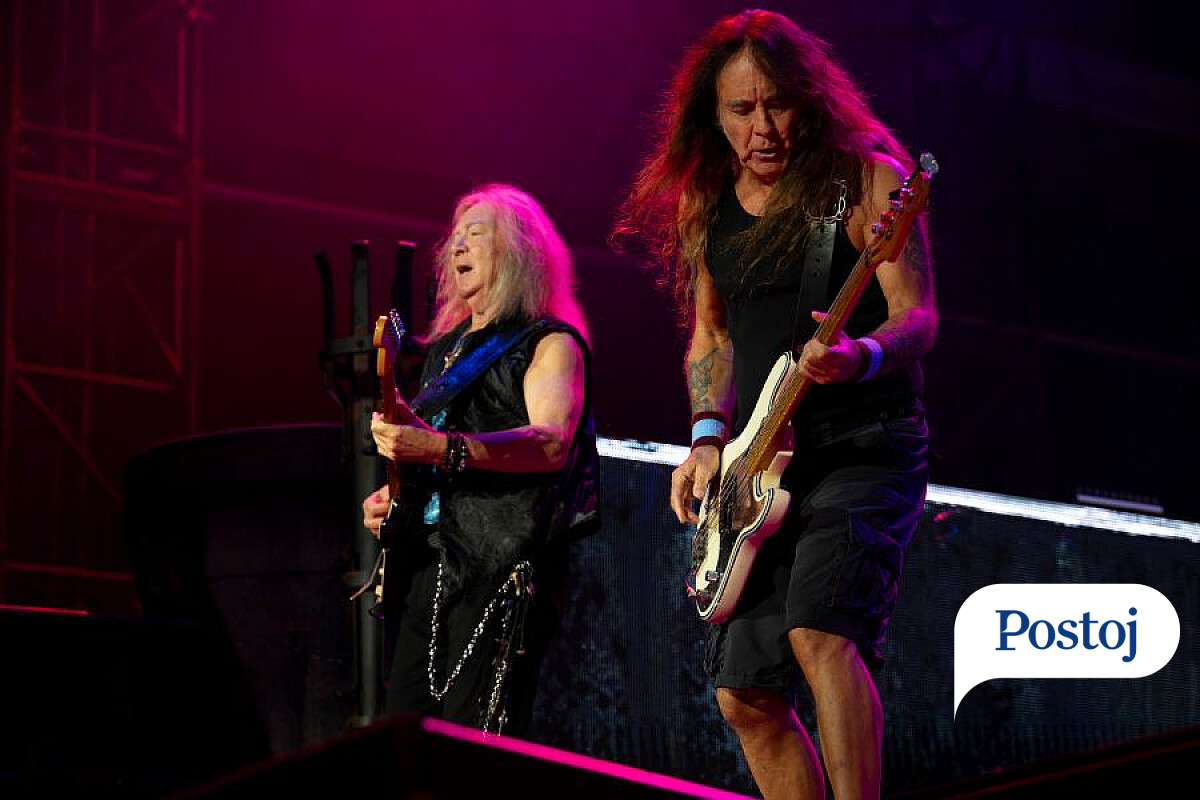
It is a clear sign that Steve Harris (bass), Dave Murray (guitar), Simon Dawson (drums, replaced Nick McBrain on tour), Janick Gers (guitar), Adrian Smith (guitar) and Bruce Dickinson (vocals) are already standing backstage and are about to start two hours of joyful mischief.
Some also noticed the ugly clouds that were approaching the stadium, but when finally around 8:50 p.m. the long-awaited Doctor Doctorthe jumping crowd quickly forgot their worries about the weather.
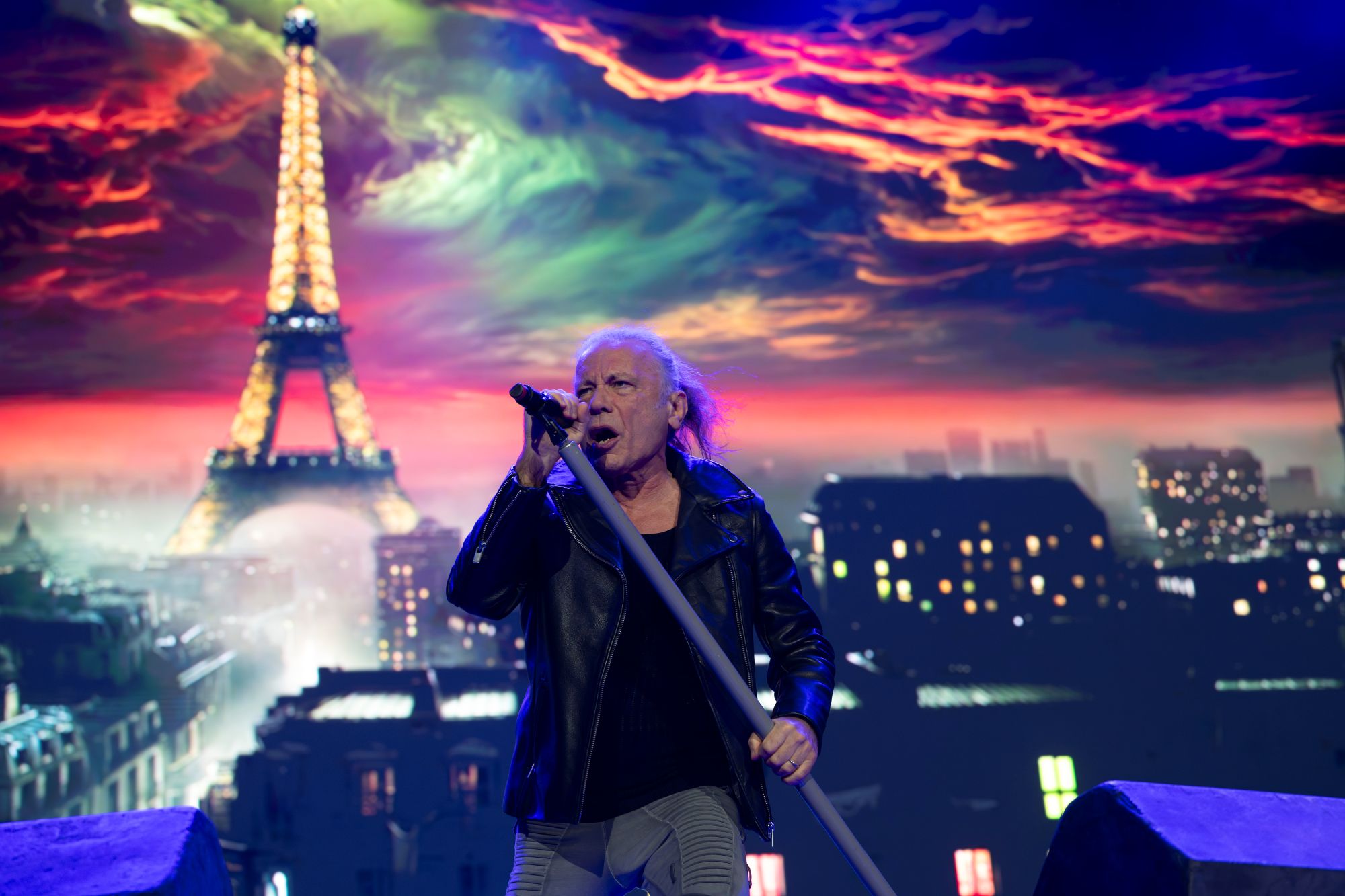
The first notes of the Iron Maiden’s own work were the intro of the album Killers (1981) titled The Ides of March from the tape, but when the visualizations on the big screen showed the landmarks of Paris, the band ran on stage and started playing Murders In The Rue Morgue with as much energy as if they were still 20-somethings playing bars in East London.
Overall is the current world tour Run For Your Lives conceived in a “retro” style – the band plays only their pieces from the debut album Iron Maiden (1980) after the album Fear of the Dark (1992).
It should be noted that this is rather a rarity for the band – unlike many other bands that have been around for a long time, Iron Maiden does not consider the release of a new album just an excuse to play old hits on tour, and usually honestly plays new stuff as well.
But this time it was different. The first four songs all came from Killersthe band’s second album. Subsequently, Bruce announced an epic Phantom of the Opera from the debut album. This song is a good example of how Maiden differed from the dominant punk underground at the time of their formation.
Although their surroundings pushed them into a more punk way of making music, Steve Harris, the band’s brain, steadfastly stood behind his artistic vision, which borrowed punk energy, but also went into more progressive musical waters with a sophisticated song structure, inspired by bands like Deep Purple or King Crimson. This distinction then enabled the Iron Maiden to survive changes in musical trends over the decades.
Perfect sound
When the chill-inducing biblical intro of the legendary song was subsequently heard from the speakers The Number of the Beastpeople spoke his words by heart.
During this track, which earned the band a controversial reputation in American fundamentalist Christian circles in the 1980s (it was actually inspired by Harris’s nightmare, the narrator becomes victim satanic cult), the rain stopped and Bruce hummed something to the effect that the storm had subsided before their music.
Come on, Bruce. He moved around the stage in a way that one would not really guess at his 67 years. He was a joy to change clothes between songs – from leather jackets to tattered coats to clothes reminiscent of plague doctors – and the audience couldn’t keep track of which side of the stage he was on, so often he ran up and down.
If I’m going to be writing articles at the level he’s entertaining audiences at his age, I should probably take up high-level fencing as well.
On stage, however, the vocal performance of this walking air siren is most important, and it was also incredibly consistent. The band even played a song Infinite Dreams from the album Seventh Son of a Seventh Son (1988), which, precisely because of its difficulty, has not been played since the 80s.
It continued with a triad of songs from an ancient Egyptian album Powerslave (1984), which critics often cite as the best the group has produced. Epic melodic compositions such as long-winded Rime of the Ancient Mariner they also fully checked the sound system of the concert.
It was, as far as I can judge it as a layman, perfect, I was surprised how clean guitars can sound in an open space at such a high volume. The galloping bass of Steve Harris, which with its strong presence in the imaginary center of the stereo space on studio recordings leaves no one in doubt as to who is the boss in the band, was also heard luxuriously clearly.
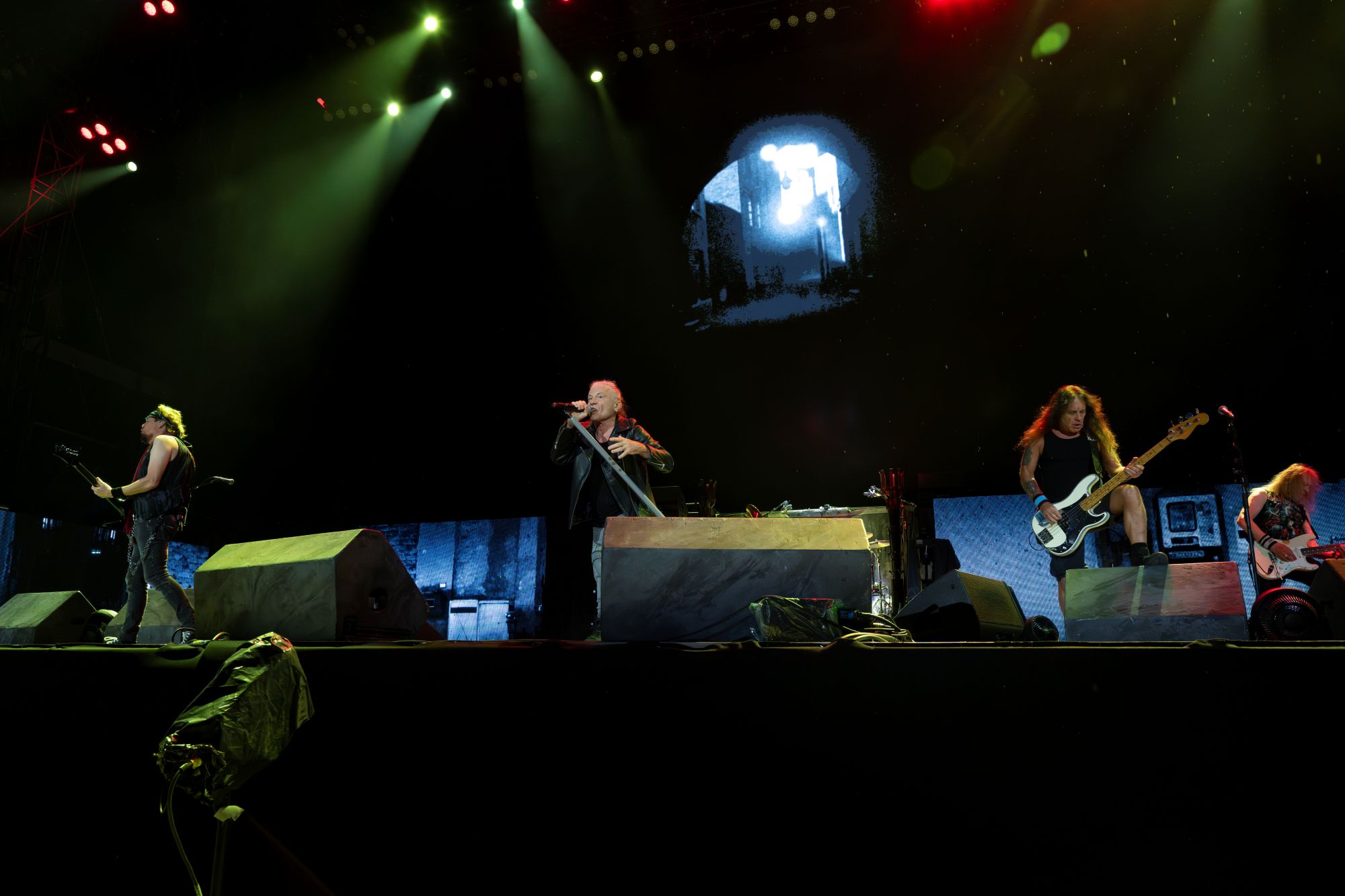
Indian Run to the Hills she made the audience sing perhaps in an unprecedented way. After progressive Seventh Son of a Seventh Son followed The Trooperduring which, in addition to Bruce in a military uniform, who waved the Slovak flag for a while, Eddie, the band’s beloved mascot, the personified spirit of its music, also appeared on stage.
After a pensive Hallowed Be Thy Name expectedly the anthem came Iron Maiden from the debut album, which the band typically plays before encores. “Iron Maiden’s gonna get you, no matter how far,” we sang, and I realized then that Iron Maiden can hit you wherever you are in society, whether it’s in the newsroom, in the corporate office, or in the factory. It was enough to look around.
Churchill and the fear of the dark
After a short pause, the Bratislava stadium was filled with the noise of war, into which the band played Winston Churchill’s famous speech from 1940 about where British troops will fight everywhere and that they will never surrender (by the way, the speech was not recorded, Churchill only repeated it for the purpose of recording in 1949).
In short, Iron Maiden like to write lyrics about extraordinary subjects such as mythology, wars, history or movies. Sex or parties are not an interesting enough topic for them. Anyone can try that, we prefer to write about things you don’t experience every day, like death, Bruce joked in the documentary Burning Ambitionwhich is currently also in our cinemas.
The audience reunited as they sang the clean guitar melodic line at the beginning of the song Fear of the Dark. When I first heard the recording of the legendary 2001 Rock in Rio concert as a twelve-year-old, hearing 250,000 people sing the passage at the same time made me promise myself that I would experience it live one day. After yesterday, I know I was wrong. It won’t be just once.
The band ended its Bratislava show with an encouraging song Wasted Years with a beautiful, uplifting chorus. She then traditionally played for the audience to leave Always Look on the Bright Side of Life from Monty Python.
On a slightly more prosaic topic – the organizers of the Slovak concert should be praised for their excellent organization, even abroad with such crowds, one often does not get in and out so quickly. Toilets and (overpriced) refreshments were also easily accessible, basically I didn’t notice significant advice anywhere. And I didn’t see it with my own eyes, but I heard that they managed well even a minor conflict situation on the standing area.
A timeless vision
Fans of hard music were, of course, lucky for a constellation of several technical factors on Saturday. The sound was great, the band was full of energy, Bruce sang incredibly consistently, the organization was good, the crowd had a great atmosphere. When the concert marks for “the best Iron Maiden concert in Slovakia” by someone like music columnist Rudi Rus, you know it was really special.
However, behind all this there is still a question – why Iron Maiden? Why is it that this band, not played on the radio, can provide tens of thousands of people with such a powerful community experience? Why did Iron Maiden survive even new generations of genres and artists, when it seemed more than once that they would be lost in a flood of new releases?
I believe that behind it is the uncompromising artistic vision of Steve Harris, who wrapped barbed wire around it at the beginning of the band’s existence with the generous help of producer Rod Smallwood.
Musically and lyrically, Iron Maiden is a bit more sophisticated music than what was dominating the East London bars when they formed. With them, the listener will travel through ancient Egypt, the front lines of all kinds of wars, think about the ethics of cloning, and immerse himself in literature.
It is music that recognizes that there is something greater than ourselves and our immediate needs. And this, in my opinion, is what caused heavy metal in this form to survive both the invasion of “street metal” bands (with which it now coexists in symbiosis) and grunge (with which it cannot coexist, because as relevant [kontra]the cultural movement basically no longer exists).
And so now I can sit here, I, who wasn’t even alive at the time of Bruce’s return to the band at the beginning of the millennium, write an enthusiastic report from a Maiden concert and subconsciously somehow suspect that there is a non-zero probability that this strange music will catch my children one day.
Source: Postoj

