


But you have to look for him a little in the cinemas. He came at a time when a sequel to a well-known film is being heavily promoted The Devil Wears Prada.
And some movie theaters may have thought that who would be interested in a film about how a girl just after high school graduation decides whether to give her love a chance and develop a relationship with a boy or choose a radical path – to join a contemplative religious order.
The film caused a stir for several reasons. His point is fairly well known, so I guess I won’t disappoint the audience by revealing it. A girl who has everything in front of her, is young, pretty, smart, even attracts boys, decides for a religious life in a strict cloister.
At the same time, the author of the script and the director Alauda Ruiz de Azúa (of Basque origin) says herself that she is “laica y no creyente” (secular and unbelieving) and she got into the topic of religious vocation and discernment rather out of curiosity. She wanted to understand the women who choose such a life, because she knew a young woman who made such a decision. But the director says that the universal human need to believe in something, be it God, other people, or the family itself, is also important to her.
Her movie Sunday (in the original Los domingosbut even in English it is plural, that is Sunday) was a remarkable success abroad as well, but especially at home in Spain he won the most prestigious awards. The Spanish academics deciding on the awarding of the Goya Awards recognized it as the best film, but it also received the award for the best director, original screenplay and two awards were also given to the actresses (Patricia López Arnaiz and Nagore Aranburu).
The film was therefore well received by the audience and the professional public. It also has an interesting political context. The film caught the attention of the Spaniards precisely at a time when the left-wing progressive Prime Minister Pedro Sánchez, who is looked up to by the European left with hope, is in power for the second term. Maybe this is also a form of protest.
Because many here have their mouths full of respect, tolerance, respect for personal freedom, but then suddenly it doesn’t apply. They cannot express them in a situation where a free decision is against their beliefs.
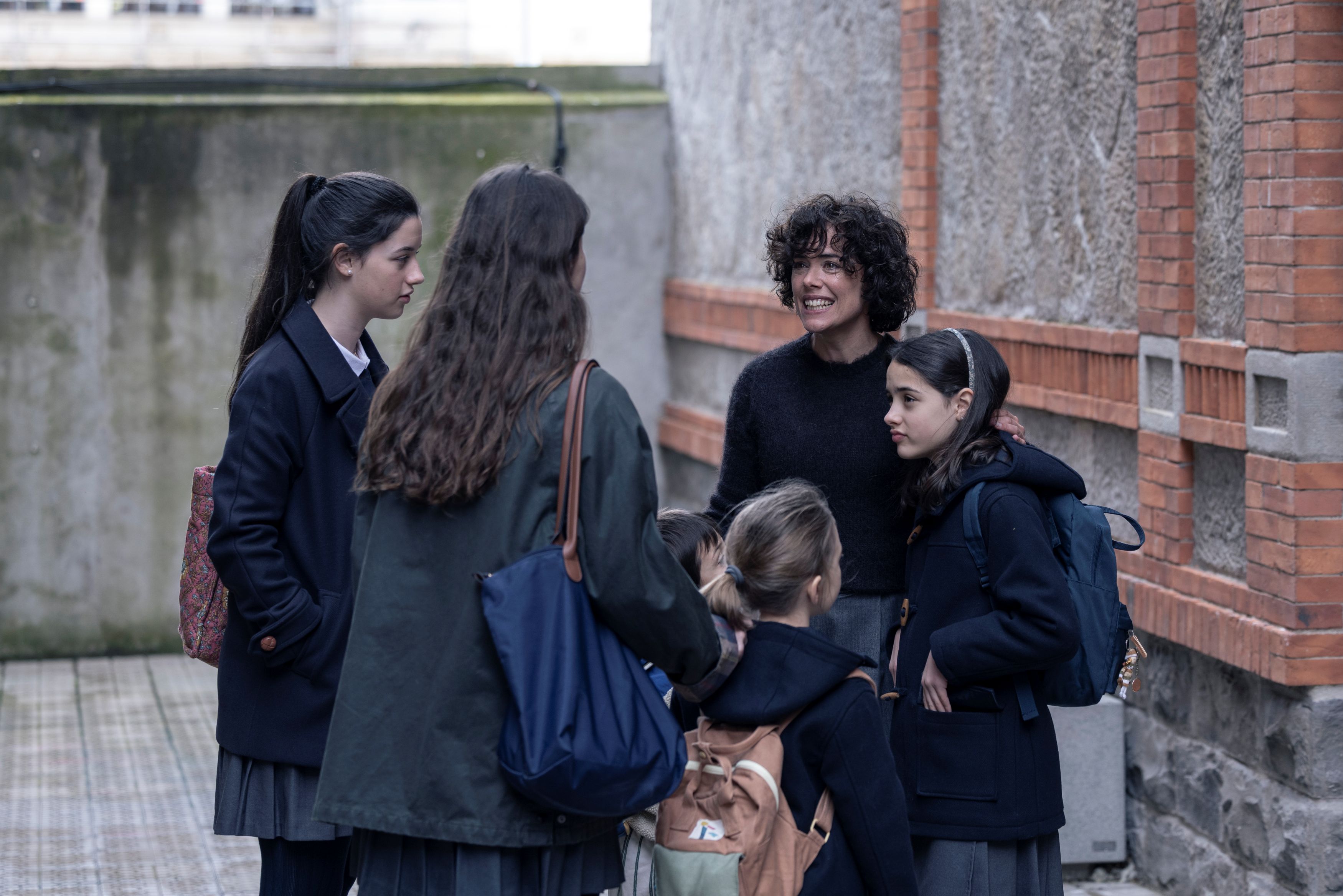
Sunday is not only about the teenager Ainara, who decides to live in a cloister because God called her to this service.
Family life is important here, we can enjoy it with all its ups and downs.
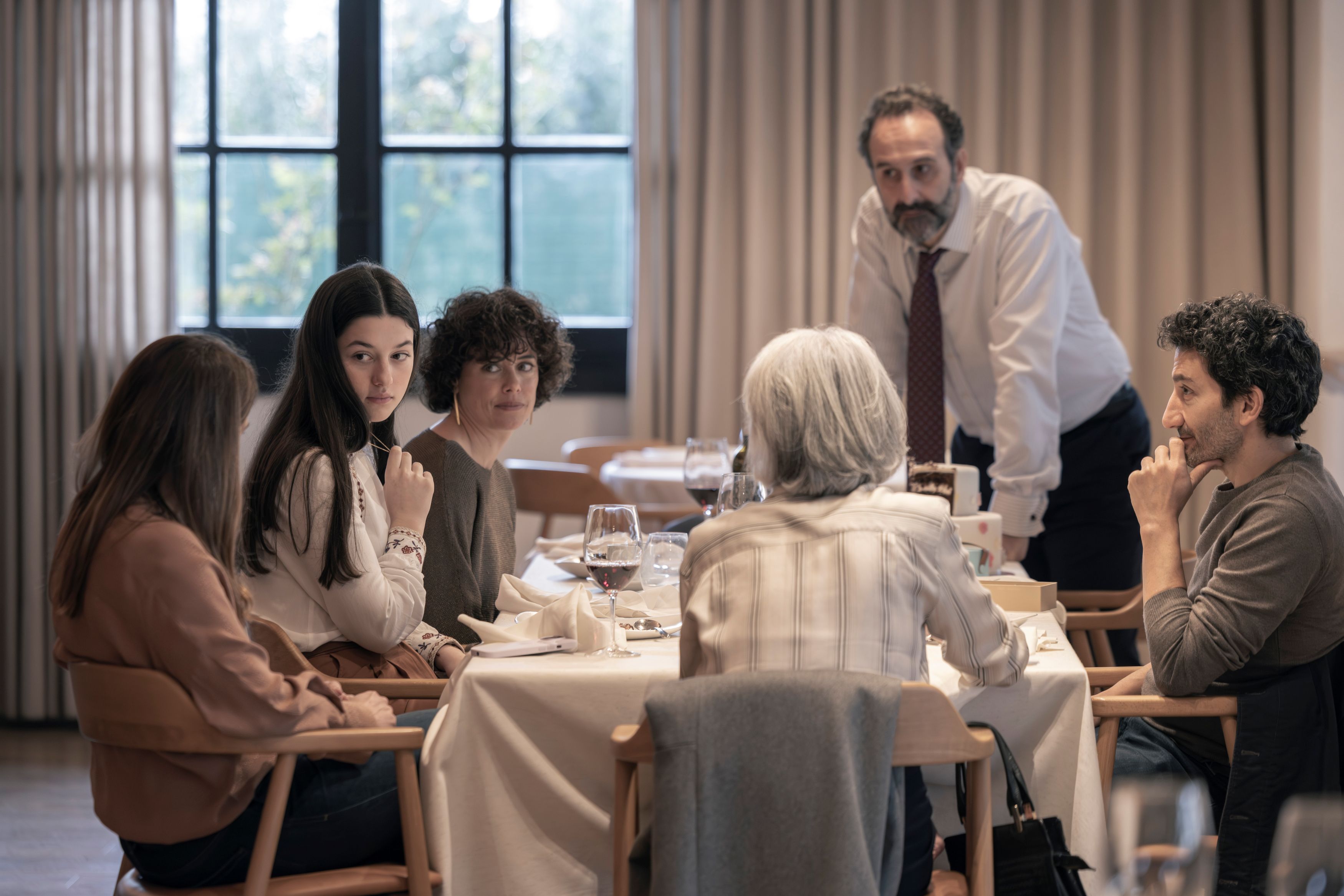
We see an ordinary Spanish family, which on the whole works even on such a larger scale. There is a grandmother, a father, his sister with a man, three sisters, their cousin. When they get together, and they still get together, quite a lot of them sit at the same table. The mother of the three girls, who died, is missing, but in time the father’s new partner will be added.
In the beginning, family cohesion is visible, although conflicts and tensions are increasing. There are also financial problems, and an unemployed man and his hard-working wife with a mortgage, and another man whose business is going bankrupt. They talk about mortgages, about starting an apartment, about the fact that it is difficult to get a job in the state administration, marital infidelity appears. He cares a lot.
But there is also a self-sacrificing grandmother who loves her grandchildren. And despite many difficult things, the family somehow works together, sticks together. It’s nice to see how Ainara’s aunt helps raise her brother’s three girls who lost their mother. Ainara has a second home with her aunt and can talk to her the way she would probably talk to her mother. Until the topic of religious life is brought up.
There is no doubt that the aunt wants only the best for her beloved niece. But he certainly does not imagine a monk’s habit underneath.
The girls go to a church school, but the faith is rather customary here and has disappeared in the father’s sister’s family. However, they all go together to Ainara’s sister’s first communion.
The question of faith does not divide the family yet, it is a matter of family tradition. Until Ainara informs the family that she would like to try a shorter stay with the sisters in the cloister, because she feels a call to the religious life.
Only this thing really divides the family. Although at first it’s just a few days in the monastery.
But Ainara admits that she might not even go to college. Ainara’s aunt strongly opposes it. She considers it a premature decision, her beloved niece should first study, taste life, enjoy herself, but then she will see if this calling will still be there. Her arguments sound reasonable, Ainara really might be too young to make such a decision.
Of course, the aunt is convinced in her heart that when Ainara begins to enjoy adult, student life, she will lose interest in the religious life, but she does not tell her so openly. It also looks respectful.
The father is struggling with different feelings, he also goes to Ainara’s school to talk, he listens to what the young priest, who is Ainara’s spiritual leader, tells him. He tries to understand it all, he knows that his daughter is not crazy, she does not need a psychiatrist.
Finally, father and aunt take Ainara to the monastery for a short stay and meet the superior. They will understand that this is a serious matter.
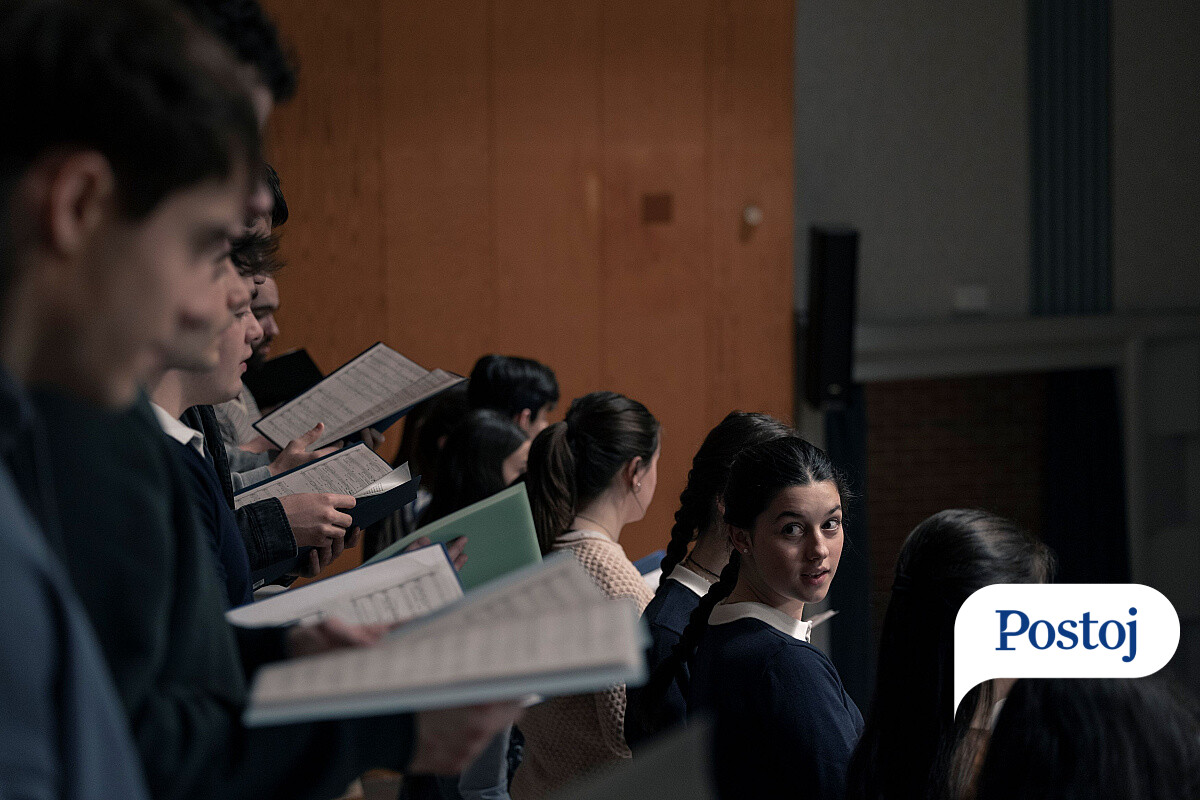
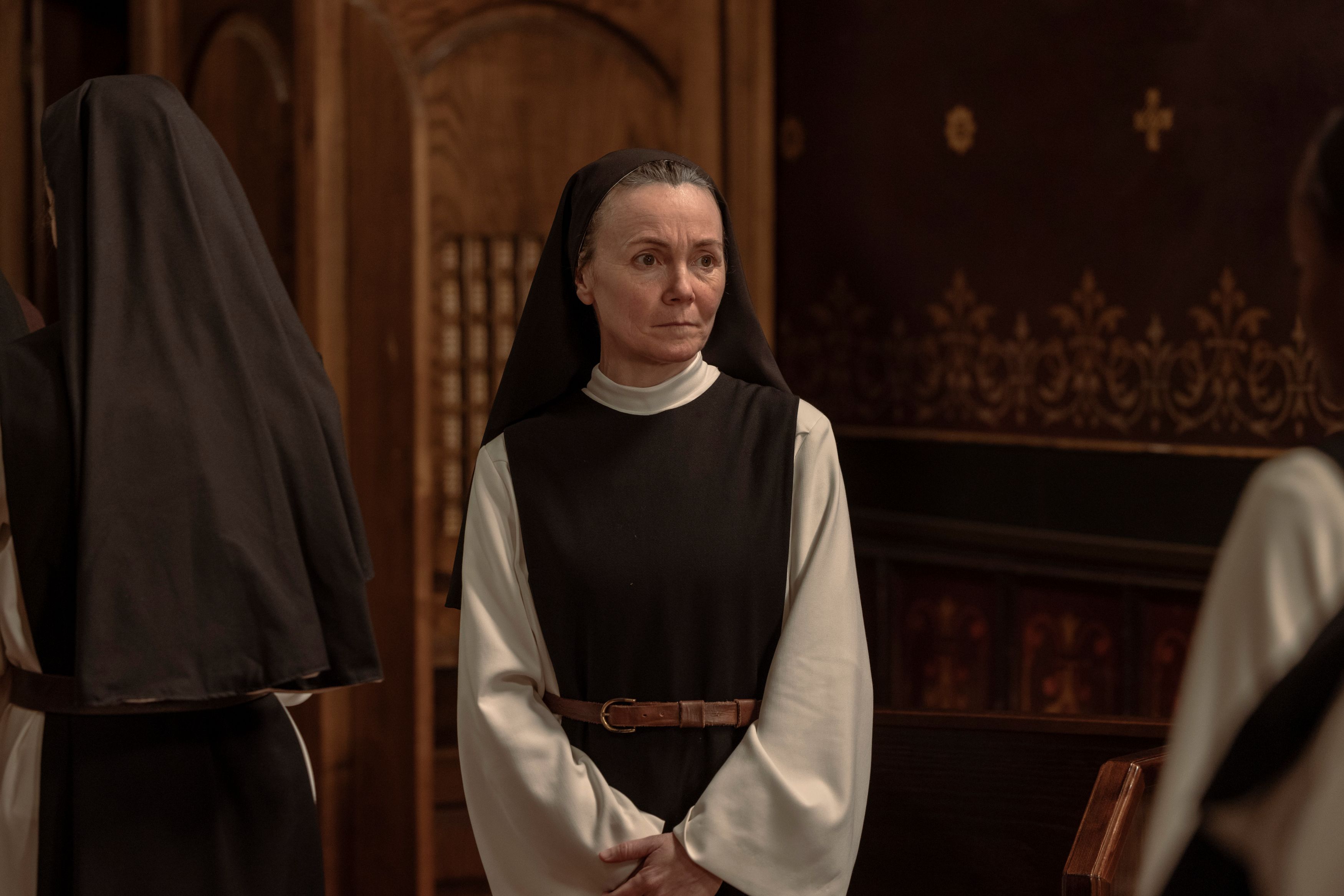
And then there in the monastery, Ainara stands in jeans and sneakers among the women in the habit, trying to sing along with them. As if she was finding peace. But everything there is austere, quiet and humble. But not inhuman, the matron is a stern woman, but with kind eyes. There is also a young postulant who tells Ainara that her decision was quick and clear, she suddenly knew that she had to leave everything behind. She exudes quiet joy.
Ainara has something to envy her, she doesn’t have it like this yet. At home, the fact that he thinks like this at all causes both disarray and sadness.
We feel sorry for Ainara’s father, we see that he is going through a complicated time, he is a widower, raising three girls is getting too much for him, he has financial problems, he tried to start a new business, it didn’t go well, he experiences contempt from his sister… The costs of his daughter’s university studies would probably be hard to bear, but she will put such a responsibility on his tired shoulders. Is this her spiritual mission?
But even Ainara herself is not quite clear about it, she still needs to calmly recognize where her life will go. But she is currently experiencing her first love and is open to the relationship.
The family doesn’t get it all, she wants to be a nun and she’s kissing a boy in bed? The family is outraged, they don’t understand anything anymore. Father’s new partner also gets involved in the situation, not quite tactfully.
And grandma is leaving forever, hard, hard, hard.
And then there’s the scene in the church where Ainara desperately begs God to give her an answer. First we see crying, pain, then it suddenly changes, a smile, joy appears. It’s such a mystical moment, even father and aunt see it. There is no other way for Ainara.
Sadly, Ainara’s decision also contributes somewhat to the fact that the extended family falls apart completely. Among them is bitterness, regret and pain.
Ainara seems to have left it all behind, we see her then in the church, entering the novitiate, looking composed, content, dignified, like a young woman who is exactly where she should be.
The father is here, looking proudly at his daughter. In the other family that rejected Ainara, as if everything is falling apart, the beloved aunt is full of pain, anger, bitterness, something is wrong with her life.
The road to forgiveness, reconciliation, humility will be long, if it is ever taken.
She is also convinced that she has respect and tolerance, and wants her niece to choose her own path freely. But suddenly it has its limits. The aunt, who is a successful cultural promoter, cannot have respect for something that is outside her world and values.
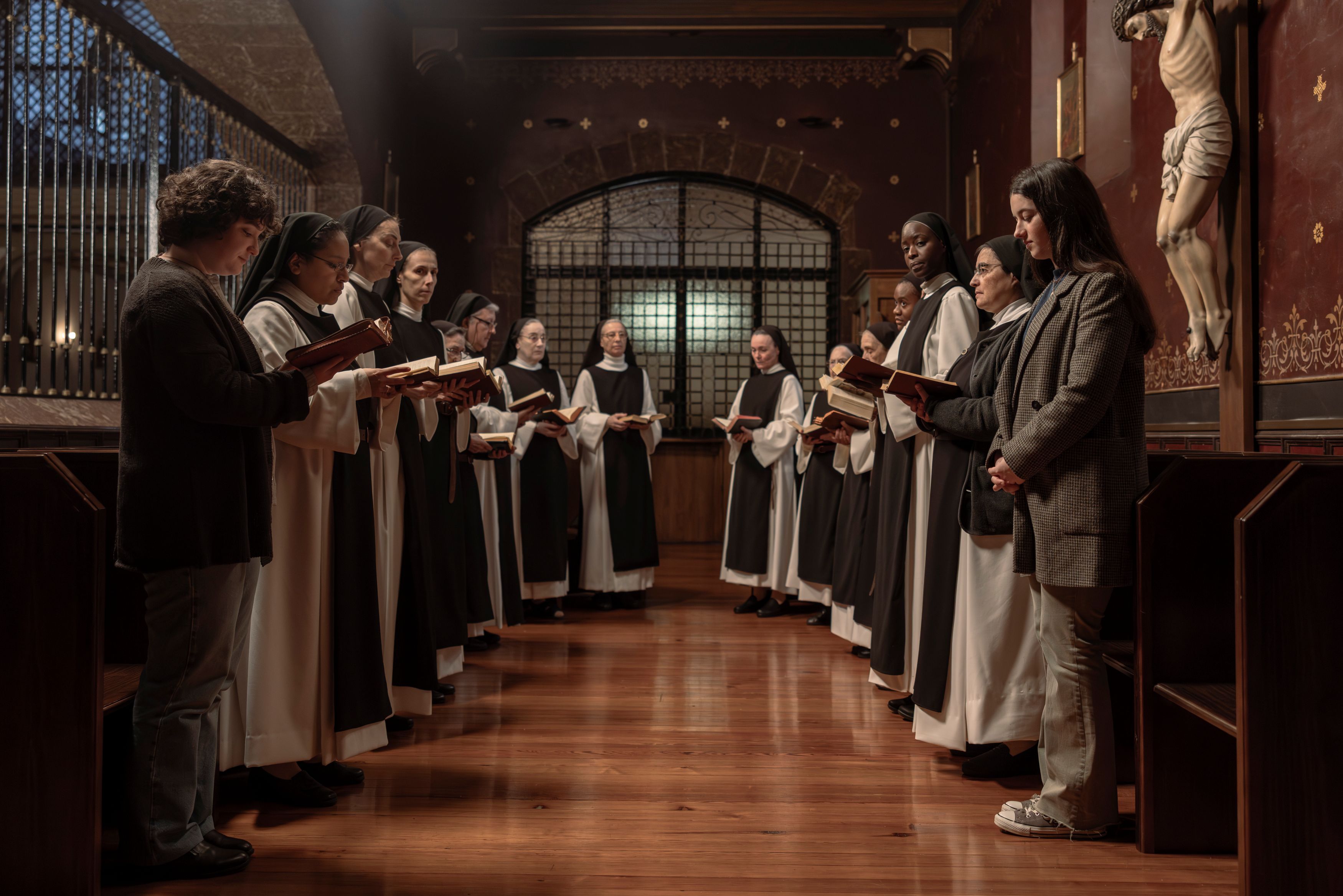
A chamber film with a detailed study of family relationships, but also of social conditions and family models that work or don’t work.
Yes, it can also be seen that young Ainara is too early thrown into a difficult family situation, from which she may be looking for an escape. The father is not able to raise the children alone, he is not good at business, he brings in a new partner, it is quite a chaos – so maybe a life in peace, in silence, in a strict regime and in prayer seems more attractive to the girl.
Perhaps it will also appear that her aching soul longs for such peace. That it is mainly about him.
But the author puts in the film the mystical scene in the church, when we see that Ainara got an answer from the one she asked, and that answer was resolute. There is someone, and it’s not father, not aunt, not matron, who has a plan for her. And she decided to fulfill it.
At the end, we see peace and quiet joy in the face of the novice Ainara, although she is behind bars, outside the world of her friends, classmates, separated from her family.
A secular filmmaker without faith in God admits that God may have a plan for you that even you don’t understand at first, your loved ones may harshly reject it, it will bring you a lot of pain, but you still have to follow it.
Weird. Disturbing. Encouraging.
Source: Postoj

